The Complete Guide to Safe Steak Storage for Busy Households

📋 Table of Contents
- Introduction: Why Safe Steak Storage Matters
- Understanding Steak Storage Basics
- Proper Refrigerator Storage
- How to Freeze Steak Correctly
- Safe Thawing Techniques
- Steak Storage Tips for Busy Households
- How to Tell If Steak Has Spoiled
- Common Storage Mistakes to Avoid
- Frequently Asked Questions
- Conclusion
Introduction: Why Safe Steak Storage Matters
In busy households, storing steak safely is essential—not only to protect your family’s health but also to preserve flavor, juiciness, and quality. With packed schedules, after-school routines, and last-minute dinner plans, understanding proper storage can save you time, money, and stress.
Whether you buy fresh from the butcher or order premium, perfectly portioned cuts from Omaha Steaks, safe storage ensures your steak stays delicious until cooking time. This comprehensive guide covers refrigeration, freezing, thawing, spoilage signs, and family-friendly tips—everything a busy household needs to enjoy steak safely and conveniently.

💡 Quick Tip
Safe steak storage isn’t just about keeping meat cold—it’s about packaging, placement, and timing. Small habits make a big difference.
Understanding Steak Storage Basics
Steak is a high-protein, moisture-rich food—ideal for bacterial growth if stored incorrectly. The USDA states that raw beef must be kept below 40°F (4°C) to slow bacterial development. For busy families, knowing these basics helps you avoid safety risks and maintain top-quality flavor.
The Temperature Danger Zone
According to FoodSafety.gov, bacteria grow fastest between 40°F and 140°F. Steak left at room temperature too long enters this “danger zone,” increasing risk of foodborne illness.
🎯 Why Proper Storage Matters
Safety: Prevents harmful bacteria like Salmonella and E. coli.
Quality: Preserves tenderness and flavor.
Budget: Reduces waste caused by spoilage.
Time: Helps with weekly meal planning in busy households.
Proper Refrigerator Storage
Refrigeration doesn’t stop bacterial growth—it only slows it. That’s why proper packaging and placement matter. The ideal fridge temperature is between 34°F and 38°F for maximum safety.
How Long Steak Lasts in the Fridge
| Type of Steak | Safe Fridge Time | Storage Method |
|---|---|---|
| Raw Steak | 3–5 days | Vacuum-sealed or airtight wrap |
| Cooked Steak | 3–4 days | Glass or BPA-free airtight containers |
| Marinated Steak | Up to 2 days | Sealed container or freezer bag |

Refrigeration Best Practices
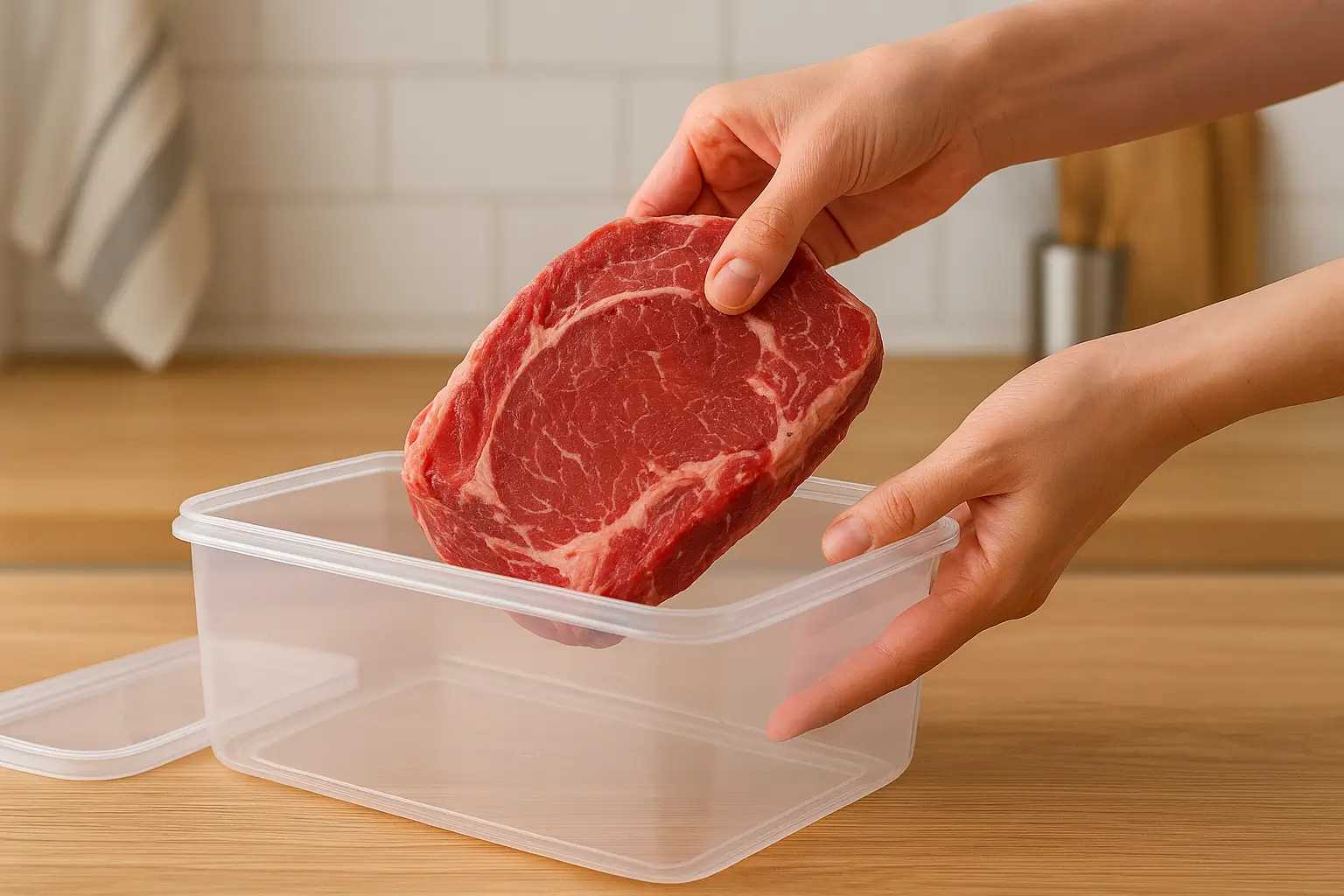
- Keep raw steak on the bottom shelf to prevent cross-contamination.
- Avoid storing meat in the fridge door—it’s too warm.
- If not vacuum-sealed, wrap steak tightly in plastic + foil.
- Keep cooked steak in sealed containers to retain moisture.
- Always label packages with the purchase date.
⚠️ Avoid This
Never leave steak out on the counter for thawing. It may quickly enter the danger zone.
How to Freeze Steak Correctly
Freezing is the best way to extend steak’s shelf life while maintaining quality—especially when buying in bulk or using meal-prep strategies.

How Long Steak Lasts in the Freezer
| Type | Freezer Lifespan | Quality Tip |
|---|---|---|
| Raw Steak | 6–12 months | Vacuum sealing preserves texture |
| Cooked Steak | 2–3 months | Freeze with pan juices |
| Ground Steak Mix | 3–4 months | Flatten to freeze evenly |
Freezer Packaging Options
- Vacuum sealing (best).
- Plastic wrap + freezer paper combo.
- Thick freezer bags with air removed.
- Use labels with date + cut name.
✅ Pro Tip
Want ready-to-freeze, individually sealed steaks? Browse Omaha Steaks package deals for flash-frozen options that stay fresher longer.
Safe Thawing Techniques
For busy households, thawing is often the step where safety mistakes happen. Avoid counter-thawing at all costs—it’s unsafe and unnecessary.

Three USDA-Approved Thawing Methods
- Refrigerator Thawing (Recommended)
12–24 hours per steak. - Cold Water Thawing
Submerge sealed steak and replace water every 30 minutes. - Cook from Frozen
Yes, you can cook frozen steak directly—works surprisingly well for pan-searing.
💡 Expert Insight
Cold-water thawing is safe as long as the steak remains sealed and the water stays below 40°F.
Steak Storage Tips for Busy Households
If weeknights are hectic, storage organization can make cooking steak easier, faster, and safer.

Family-Friendly Strategies
- Pre-portion steaks into family-sized packs.
- Use “cook me first” bins for older meat.
- Freeze marinade together with steaks for fast meal prep.
- Dedicate a fridge drawer solely to meat to prevent contamination.
- Batch-cook steaks on weekends for easy reheating.
🎯 Busy Family Hack
Flatten freezer bags before freezing steak—this saves space and speeds thawing.
How to Tell If Steak Has Spoiled
Not all discoloration is dangerous, but some signs definitely are. Always inspect steak before cooking.

Signs Steak Is No Longer Safe
- Sour or ammonia-like smell — biggest spoilage indicator.
- Sticky or slimy texture — indicates bacterial activity.
- Green, black, or iridescent patches — unsafe to eat.
- Bulging vacuum seal — gases from bacteria may cause swelling.
⚠️ When in Doubt, Throw It Out
Never risk eating questionable steak. Foodborne illness is not worth the gamble.
Common Storage Mistakes to Avoid
❌ Mistakes to Avoid
- Thawing steak on the kitchen counter
- Storing raw steak above ready-to-eat foods
- Freezing in thin grocery-store packaging
- Letting fridge temperatures fluctuate
- Not labeling freezer packages
✅ Best Practices
- Keep fridge temperature between 34–38°F
- Vacuum seal or tightly wrap steaks
- Store raw meat on the lowest shelf
- Freeze steaks within 3–5 days of purchase
- Use approved thawing methods only
Frequently Asked Questions
Can I refreeze steak?
Yes—if thawed in the refrigerator and handled safely.
Is brown steak spoiled?
No—oxidation can cause browning without spoilage. Sliminess and odor are more accurate indicators.
Does freezing ruin steak?
Not when done correctly. Vacuum-sealed and flash-frozen steaks maintain excellent quality.
Conclusion
Safe steak storage is simple once you understand temperature, packaging, and timing. With the right habits, busy households can enjoy delicious, perfectly stored steak year-round while reducing waste and preventing foodborne illness.
🎁 Want Quality Steaks That Store Perfectly?
Explore Omaha Steaks’ best deals for premium, vacuum-sealed cuts ideal for safe freezing and meal prep.
Share This Article: